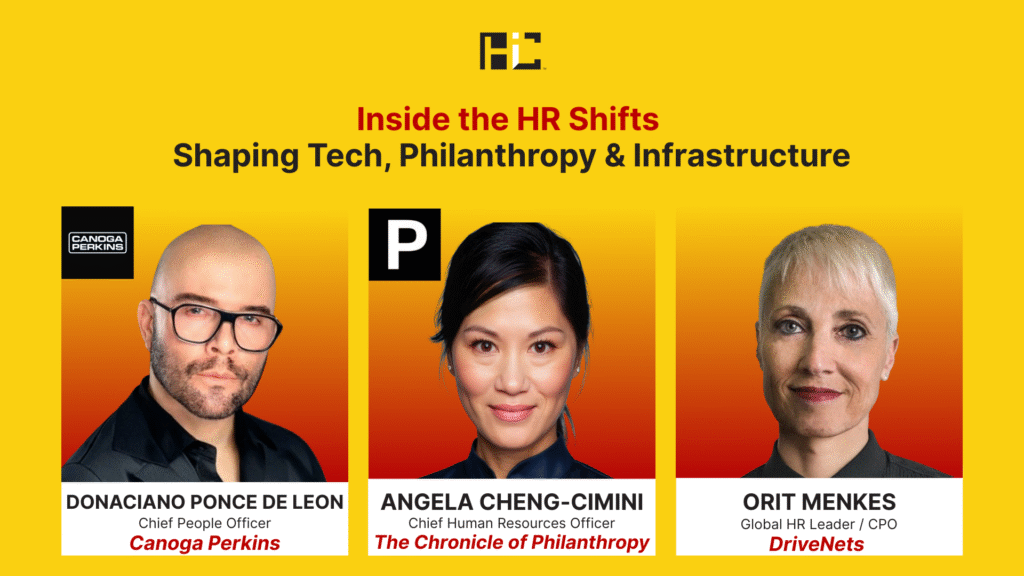

In a world where AI is rewriting job descriptions, younger generations are rewriting expectations, and leaders are rewriting what it means to show up at work, three HR executives from radically different sectors are aligned on one truth: the next era of people leadership demands courage, clarity, and a complete rethinking of how organizations grow their people.
The expectations placed on today’s Chief People Officers are shifting fast. The role now sits much closer to a COO, requiring strategic discipline, operational depth, and a level of foresight that goes far beyond traditional HR. This is especially true inside fast-scaling companies or early-stage organizations preparing for institutional funding, where the People function can’t afford to be reactive or administrative. It must design the operating system that enables disciplined, sustainable growth.
Across global tech, nonprofit media, and high-growth manufacturing, these leaders are redefining what HR looks like in practice. Their insights reflect a broader shift we’re seeing at HIC Consulting, where leaders learn through real scenarios, adapt in real time, and build cultures capable of withstanding rapid change. This is the blueprint they’re designing, one insight at a time.
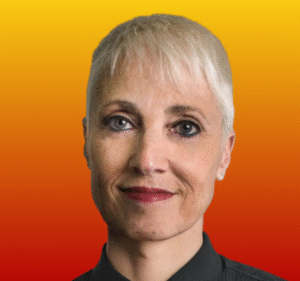
According to Orit Menkes, Global HR Leader / CPO at Check Point, DSPG and DriveNets: “HR must lead the AI transformation, not react to it.”
Orit Menkes believes today’s digital and AI-driven environments demand a reinvention of HR itself. Powering systems that reach hundreds of millions of users worldwide, the business reality she operates in makes one thing clear: HR can no longer afford to evolve slowly.
AI Is Not a Tool, It’s a Business Model Shift
Orit argues that HR must fundamentally rethink how it evaluates and develops talent in an AI-enabled world. “Companies are busy trying to stop candidates from using AI during testing. That’s absurd. If the job requires AI skills, test them on exactly that.” In her view, the future of talent assessment isn’t about what candidates can do alone, it’s about how effectively they can partner with technology.
Skill Mapping: HR’s New Superpower
Orit envisions a future where AI gives organizations deep visibility into skills and strengths. Instead of static job descriptions, companies will rely on dynamic skill maps, real-time reskilling insights, and automated team formation based on strengths and strategic needs. “AI isn’t replacing HR,” she says. “It’s replacing outdated HR.”
Leading the Change, Not Chasing It
Orit believes HR must model the adoption it expects from the business. In this next era, HR is shifting from an administrative function to a true transformation driver, proving that leadership in the AI era begins with HR itself.
According to Angela Cheng-Cimini, Chief Human Resources Officer at The Chronicle of Philanthropy:

“To influence strategy, HR must understand the business as well as anyone else.”
The Chronicle of Philanthropy is a defining voice in the nonprofit sector, supporting thousands of organizations with journalism, research, training, and professional development. The publication is evolving to help those in philanthropy, foundations, and nonprofits navigate a rapidly changing landscape and to do so in a way that meets new content consumption habits.
HR as Strategic Interpreter Angela is clear: HR cannot earn credibility by staying internally focused. “CEOs don’t expect HR to generate revenue. Rather, they expect us to craft a talent strategy that helps us meet organization objectives.” To shape strategy, HR must understand external pressures, market forces, financial indicators, organizational risks, and workforce behaviors.
Younger Generations Are Forcing a Reset Gen Z and younger millennials, she says, are reshaping workplace non-negotiables. “They demand flexibility, transparency, and mission alignment. They’re not settling for workplaces that don’t align with who they are.” For a mission-driven organization, this shift is not a trend, it’s a strategic requirement.
Content Strategy as Culture Strategy The Chronicle recently redesigned their approach to content and realigned the team to improve collaboration and meet subscribers (now called “members”) where they are. While they have always offered on-demand learning and tapped external experts, they are now leveraging multiple formats, launching a new website, and investing more in practical solutions (not just late-breaking news). The transformation reflects a core belief: culture and content are now intertwined.
According to Donaciano Ponce de León, Chief People Officer at Canoga Perkins: “Leadership is transparency, discipline, and the courage to tell the truth.”
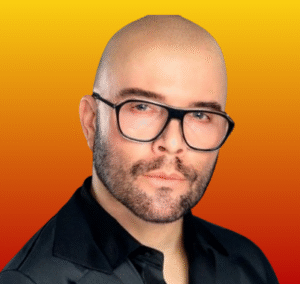
Canoga Perkins is a longstanding leader in fiber-optic and broadband manufacturing, producing the infrastructure that keeps North America connected. With the broadband market expected to exceed $70 billion by 2030, their people strategy is central to sustaining growth and quality.
From Crisis to Leadership Donaciano’s HR journey began from the ground up, literally. After being forced to abandon a planned career in medicine, he rebuilt his life through entry-level administrative jobs, working his way through every HR function and eventually earning a CFO-sponsored MBA. “I learned every function of HR because I had no choice,” he said. “I was building a future from scratch.”
A Leader-Leader Culture; Not Leader-Follower
For Donaciano, leadership is about honesty, it’s about structure, and it’s about never accepting “good enough.”
Managers are expected-required-to write real feedback, real goals, and real guardrails. For people leaders at Canoga Perkins, that means writing a detailed 30-60-90-day plan, delivering substantive written responses to employees, and having transparent conversations-even when discomfort is part of the process. These standards reset expectations around accountability and eliminate the ambiguity that so often paralyzes scaling organizations.
A critical piece of his work has been to unwind informal hiring networks and legacy practices that contributed to underperformance and cultural drift. On the basis of verifiable performance data, direct communication, and neutrally and rigorously applied standards, he is rebuilding organizational trust piece by piece. The result: clearer alignment with strategic objectives, sharper execution, and a leadership cadence that has earned the board’s attention and support.
This is disciplined, values-anchored HR on scale: an operating model where People leadership becomes a strategic accelerant, not a compliance function.
The New Blueprint for 2026 and Beyond
Across tech, nonprofit media, and manufacturing, a shared vision emerges:
AI demands a new operating system for HR, led by HR.
Strategic influence requires understanding the business better.
Leadership is transparency, discipline, and the courage to hold the line.
Together, these insights form a powerful roadmap for the future of people leadership.
Here’s How You Can Amplify Our Work (3 Quick Actions):
1️⃣ Tell your HR team about the Supercharged Management Accelerator — a program designed to help managers at every level navigate organizational dynamics.
2️⃣ Pre-order our new book, Supercharged Teams, and help spread the word! 📘
Post this on your LinkedIn feed and tag me:
We just pre-ordered Supercharged Teams: How Every Manager Can Create a Culture of Excellence by Netta Jenkins — and you should too!
3️⃣ Leave a Review once you’ve read it. If you’re a manager, aspiring leader, or someone who cares about building teams that drive real business impact, this book was written with you in mind.
About the Author
From securing an $8M breakthrough inside a global fintech to being named CEO of the very platform she built, Netta Jenkins has mastered the art of turning bold ideas into lasting business transformation. With a LinkedIn community of over 200,000, she’s the CEO redefining how organizations drive employee engagement and performance through AI. A two-time Wiley author, Netta’s work has been amplified by Arianna Huffington to more than 10 million people. Her latest book, Supercharged Teams: How Every Manager Can Create a Culture of Excellence, gives leaders the playbook to transform everyday teams into high-performing powerhouses.
As founder of HIC, a workplace consulting firm and creator of HIC HR Hub, a private community for senior HR leaders to share and gain new insights. She also hosts Beyond Management™, a viral LinkedIn leadership series with over 50 million impressions, where she sparks street-level conversations that elevate employer brands, attract top talent, and inspire customers. A seasoned TEDx and international keynote speaker, Netta has energized audiences across the U.S., Ghana, the Netherlands, and Turkey with bold insights and measurable takeaways. With 15+ years of global advisory experience, she shares weekly video tips that empower managers at every level. Her work has been featured in The Washington Post, McKinsey, Forbes, Fortune, and more. Named one of CIO Views’ Top 10 Most Influential Black Women in Business to Follow.
Netta helps organizations connect workplace culture, technology, and performance to deliver measurable, lasting impact. Previously serving as VP of Global Inclusive Strategy at IAC, Netta partnered with brands like Match.com, Vimeo, and Daily Beast. She advises Betterment, consults executives via the Intro app, and is pursuing a doctorate in quality systems. Currently, she collaborates with Marc Lore (former CEO of Walmart) and Preet Bharara (former U.S. Attorney for the Southern District of New York) to build Telosa, a visionary new city in America. Residing on the East Coast with her family, Netta continues to make a transformative impact in both the corporate and startup landscapes.