HIC

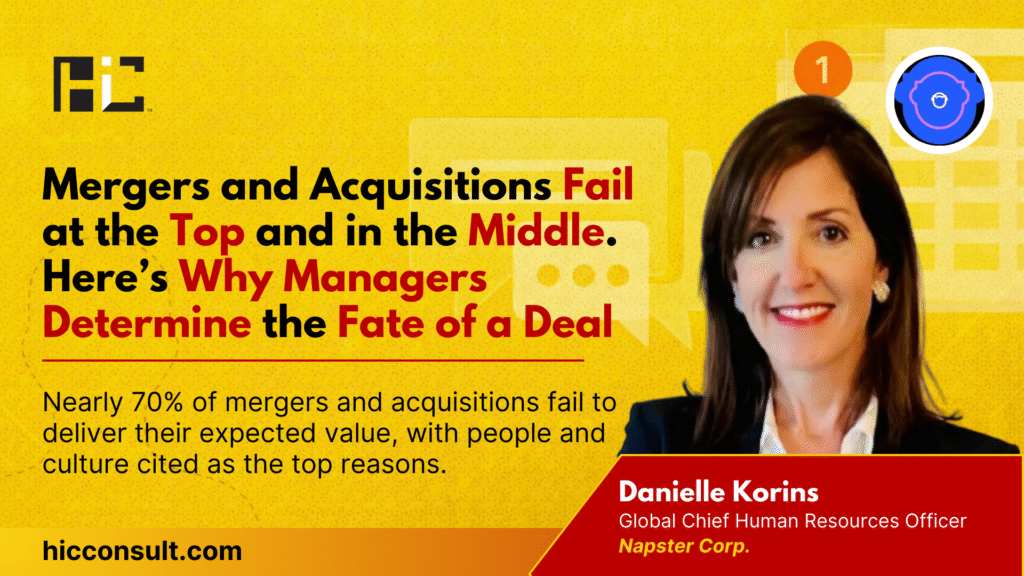
Mergers and Acquisitions Fail at the Top and in the Middle. Here’s Why Managers Determine the Fate of a Deal

According to McKinsey, nearly 70% of mergers and acquisitions fail to deliver their expected value, with people and culture cited as the top reasons. Yet most organizations still approach M&A as a financial and legal milestone, not a leadership stress test.

That disconnect is that M&A is an enterprise wide initiative, and prepared and excellent HR teams can be that force that helps the deal succeed. It’s a reality Danielle Korins, Global Chief a Human Resources Officer has navigated repeatedly throughout her career in more than 50 M&A processes.

“M&A is the moment when leadership behaviors are no longer theoretical,” Korins explained. “Every decision, every conversation, and every silence gets magnified.”

The overlooked truth: Managers dictate the M&A experience

While executive teams negotiate deal terms, employees experience M&A almost entirely through their direct managers. Gartner reports that 75% of employees rely on their manager as their primary source of information during organizational change, not corporate communications or HR announcements.

This article was released on Inc.com first.

Read the full article here:https://www.inc.com/netta-jenkins/mergers-and-acquisitions-fail-at-the-top-and-in-the-middle/91296644

Photo credits to Inc.com

Related Post

Some related posts for this similar category.

At this week’s HIC Executive Roundtable, senior HR leaders reached a shared conclusion: the nine-box framework isn’t wrong, but it’s no longer enough. As Sarah Patterson, Chief People Officer at Limble, highlighted, static labels fail to capture how talent actually grows, adapts, and drives impact in today’s fast-moving organizations. Forward-thinking leaders are shifting toward dynamic, real-time ways of evaluating performance, potential, and business value.

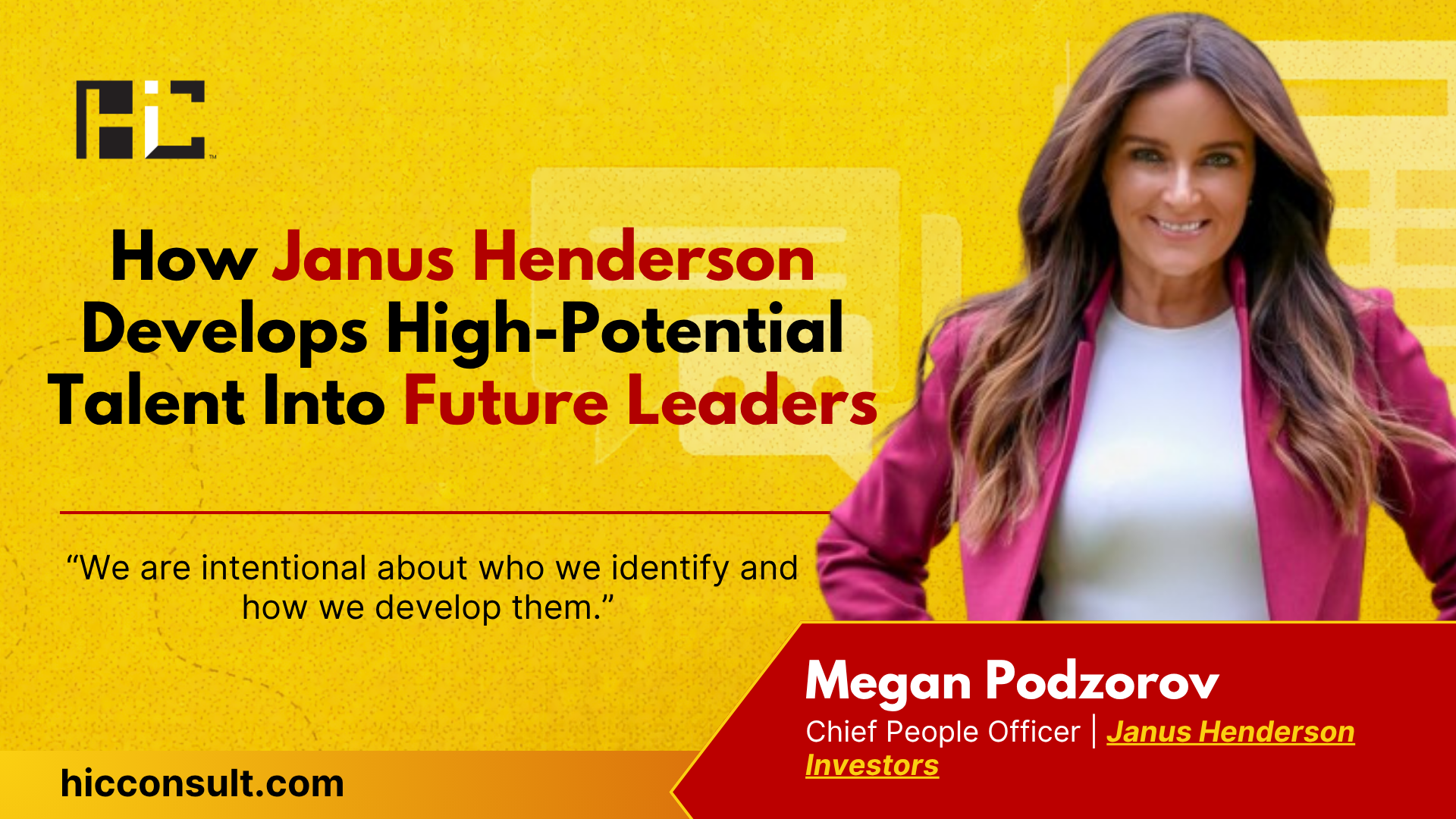
High-potential talent doesn’t develop by chance. In a recent conversation, Megan Podzorov, Chief People Officer at Janus Henderson Investors, shared how the firm takes a deliberate approach to identifying and growing future leaders. Through structured talent reviews, cross-functional calibration, and intentional exposure, the organization treats leadership development with the same discipline it applies to investment decisions.

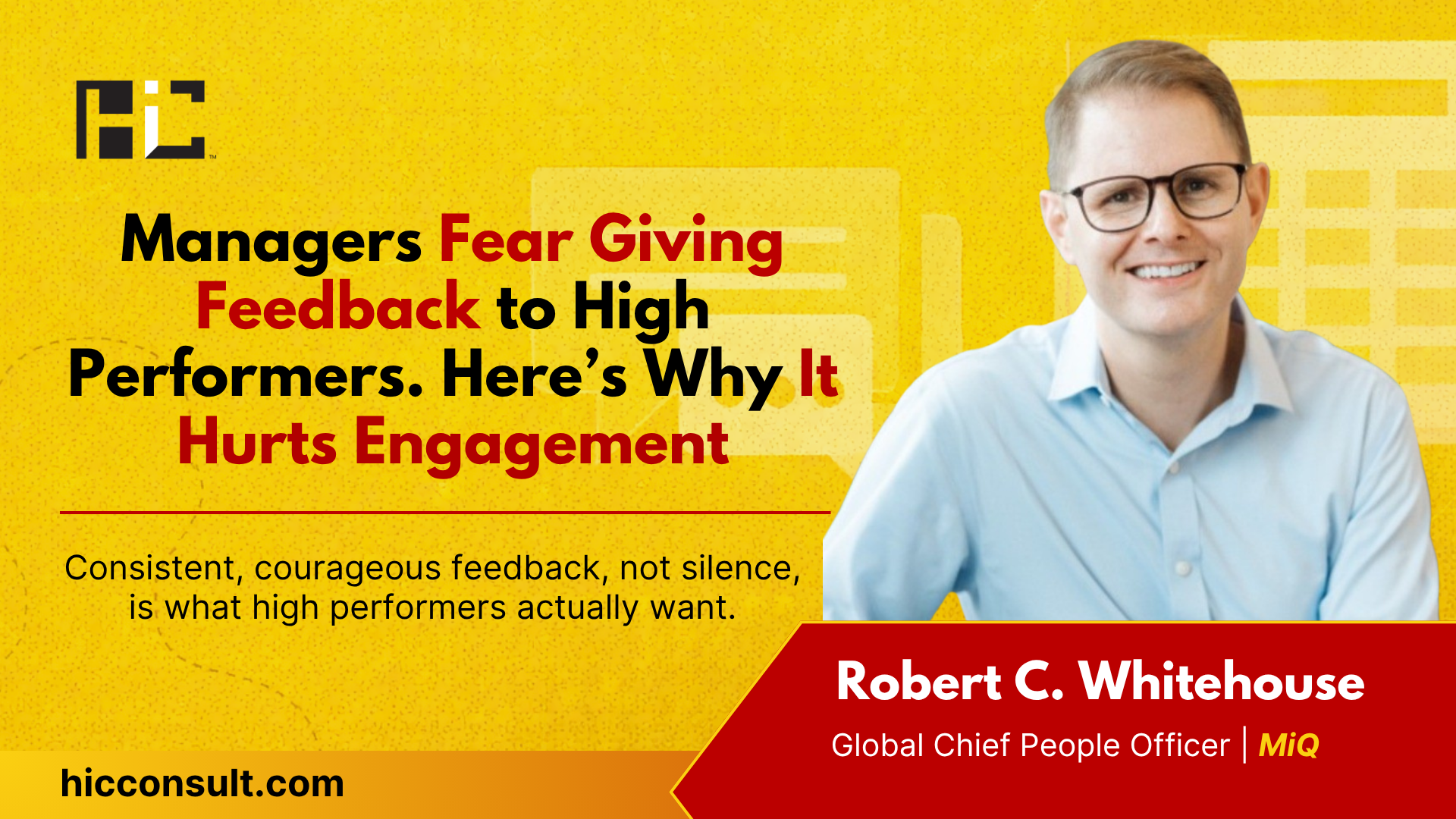
Managers often hesitate to give honest feedback to their top performers, fearing it may feel unfair or damage motivation. But that silence comes at a cost. As Robert C. Whitehouse, Global Chief People Officer at MiQ, explains, avoiding these conversations doesn’t protect high performers, it limits their growth. The leaders who drive engagement are the ones willing to have clear, consistent conversations, even with their best people.

Get Your Free Consultation

You can use these sections to highlight the features of heading. Use these paragraphs to focus on the topic you want. Make sure you keep it short and attractive.
Scroll to Top