
Most managers don’t fear giving feedback to struggling employees. They fear giving it to their best ones. The high performers who consistently deliver. The trusted team members who never miss deadlines. The rising stars everyone relies on.
That’s where hesitation creeps in. Managers worry honest feedback will feel unfair. They fear damaging motivation, and they don’t want to risk the relationship. So, they soften the message or avoid the conversation altogether.
That silence carries real consequences. According to Gallup, only 26 percent of employees strongly agree that the feedback they receive actually helps them improve. Meanwhile, employees who receive meaningful feedback weekly are 3.6 times more likely to be engaged.
The gap isn’t about knowing feedback matters. It’s about fear, especially when the employee is already performing well.
Why leaders hesitate to give feedback
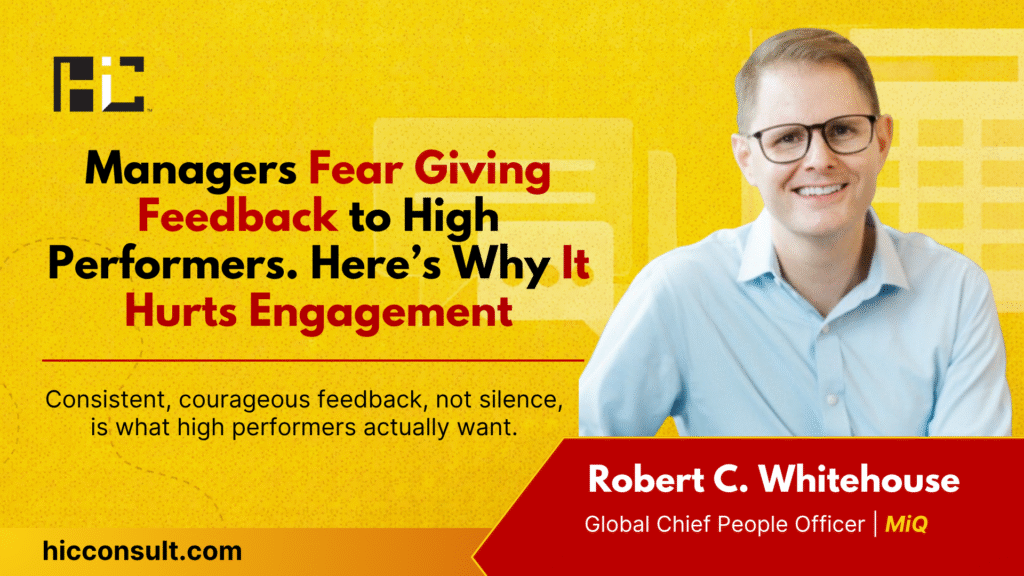
Robert C. Whitehouse, global chief people officer at MiQ, said this hesitation shows up in nearly every organization.
“The hardest feedback conversations aren’t with low performers,” he explained. “They’re with high performers. Managers worry that raising concerns will feel like criticism instead of support.”
Avoiding those conversations, however, doesn’t protect top talent. It quietly limits them.
This was published on Inc.com first.

Click the Inc.com link to read the full article: https://www.inc.com/netta-jenkins/how-managers-who-avoid-giving-feedback-to-high-performers-hurt-engagement/91308459
About the Author
From securing an $8M breakthrough inside a global fintech to being named CEO of the very platform she built, Netta Jenkins has mastered the art of turning bold ideas into lasting business transformation. With a LinkedIn community of over 200,000, she’s the CEO redefining how organizations drive employee engagement and performance through AI. A two-time Wiley author, Netta’s work has been amplified by Arianna Huffington to more than 10 million people. Her latest book, Supercharged Teams: How Every Manager Can Create a Culture of Excellence, gives leaders the playbook to transform everyday teams into high-performing powerhouses.
As founder of HIC, a workplace consulting firm and creator of HIC HR Hub, a private community for senior HR leaders to share and gain new insights. She also hosts Beyond Management™, a viral LinkedIn leadership series with over 50 million impressions, where she sparks street-level conversations that elevate employer brands, attract top talent, and inspire customers. A seasoned TEDx and international keynote speaker, Netta has energized audiences across the U.S., Ghana, the Netherlands, and Turkey with bold insights and measurable takeaways. With 15+ years of global advisory experience, she shares weekly video tips that empower managers at every level. Her work has been featured in The Washington Post, McKinsey, Forbes, Fortune, and more. Named one of CIO Views’ Top 10 Most Influential Black Women in Business to Follow.
Netta helps organizations connect workplace culture, technology, and performance to deliver measurable, lasting impact. Previously serving as VP of Global Inclusive Strategy at IAC, Netta partnered with brands like Match.com, Vimeo, and Daily Beast. She advises Betterment, consults executives via the Intro app, and is pursuing a doctorate in quality systems. Currently, she collaborates with Marc Lore (former CEO of Walmart) and Preet Bharara (former U.S. Attorney for the Southern District of New York) to build Telosa, a visionary new city in America. Residing on the East Coast with her family, Netta continues to make a transformative impact in both the corporate and startup landscapes.